Sneak Preview: Mergers & Acquisitions in Mining Tech with Ivan Gustavino
In this sneak preview, Ax Legal’s Managing Partner Cody McFarlane speaks with Ivan Gustavino, Managing Director at Atrico, who has advised over 100 high-growth companies in mining, industrial tech, and software. With M&A activity heating up, Ivan breaks down what investors and buyers really look for in mining technology companies today.
Chile’s mining sector is starting to build real momentum again. In the past few weeks, the two largest projects submitted to Chile’s Environmental Assessment Service (SEA) since at least 1992 have been filed: a US$7.5 billion expansion by Freeport-McMoRan and a US$5.1 billion project from BHP.
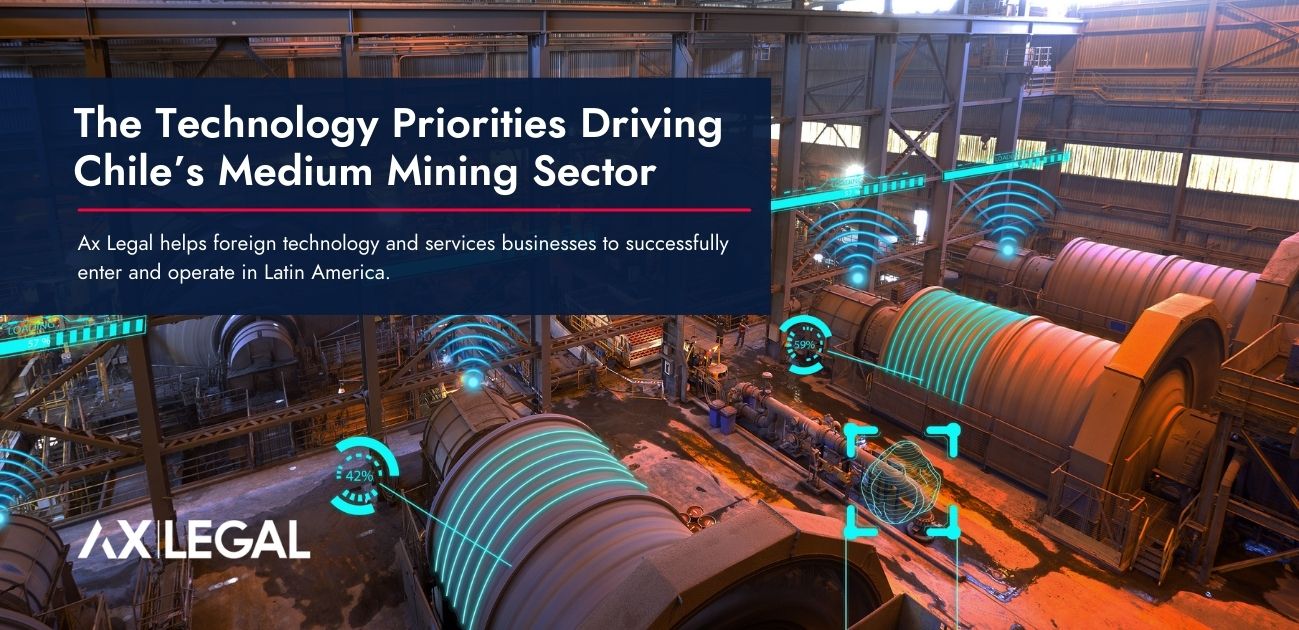
Mining in Chile often centers on the largest players, but medium-sized operations are just as critical — and operate under tighter margins and capital constraints. In this segment, improvements in water efficiency, recovery, or asset availability are not incremental upgrades; they are strategic drivers of competitiveness. A November 2025 study provides a practical roadmap showing where the right technologies can make a measurable impact.
It is very common for foreign companies in the industrial sectors to send specialists into Chile for short, focused periods to help with commissioning, supervision, installation, or troubleshooting. It is important for foreign companies to understand how to send technical and project staff to Chile, the differences between work permits and work visas and the common pitfalls to avoid.
Chile plays a central role in global copper supply. A clear overview of the countries 2025–2034 mining investment pipeline, highlighting what has changed, which projects are driving growth, and the opportunities emerging for mining suppliers and technology companies.
Water is a critical and irreplaceable input for Chile’s mining industry, underpinning every stage of copper production, from complex sulphide ore processing and tailings management to dust control in open pits. Each year Cochilco publishes its Water Survey for Chilean copper mining, giving stakeholders a clear, data-based view of how and where water is used in mining operations.
Cochilco publishes a detailed assessment each year of how Chile’s mining energy matrix is evolving, and the 2024 edition is one of the most revealing to date. The data shows an industry working harder than ever, digging deeper pits, processing harder ore, and relying increasingly on seawater.


 Santiago
 Sydney
 Lima
Lima