Sneak Preview: Mergers & Acquisitions in Mining Tech with Ivan Gustavino
In this sneak preview, Ax Legal’s Managing Partner Cody McFarlane speaks with Ivan Gustavino, Managing Director at Atrico, who has advised over 100 high-growth companies in mining, industrial tech, and software. With M&A activity heating up, Ivan breaks down what investors and buyers really look for in mining technology companies today.
Industrial technology and engineering companies go where the projects are, whether that’s a copper mine in Peru’s southern Andes, a lithium operation in the Atacama or an offshore field in Brazil. Winning that first contract in a new country is exciting. But the way you deliver it, who you send, how long they stay and what they’re authorised to do, can create tax obligations you never planned for..
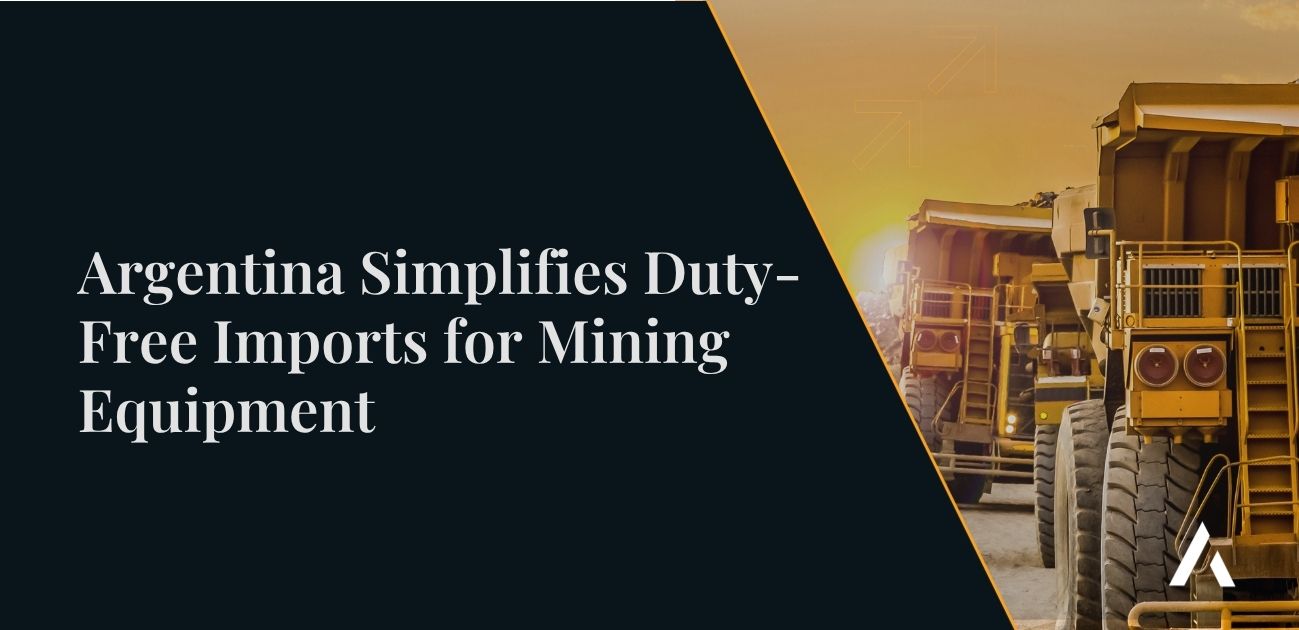
Argentina has simplified the process for registered mining companies and service providers to import qualifying equipment, spare parts and inputs duty free. For mining technology and equipment suppliers, this can mean faster imports, easier movement of used equipment, and more flexibility to support multiple projects across the country.
Every company in Brazil pays corporate tax under one of two systems: Lucro Presumido or Lucro Real. You choose. The problem is that nobody told you or even asked about which of Brazil’s two corporate tax regimes that you wanted to be part of. No one ran the numbers because you didnt know and now your locked into a system for the next 12 months.
Argentina has quietly become one of the world’s most important mining stories…and it is now impossible to ignore. By the mid-2030s, the country could rank among the world’s top five copper exporters and top three lithium producers, and the foundations for that are being poured right now.
Importing mining equipment and industrial technology into Chile is perfectly manageable, but it requires more than just arranging freight. A successful import depends on getting several things right at once: customs, tax, regulatory approvals, technical documentation, and operational requirements specific to mining.
Argentina, Chile, and Peru are not just the world’s copper heartland. For the next decade, they are where the industry gets built — and where the smartest mining technology and service companies are already planting their flag.



 Santiago
 Sydney
 Lima
Lima